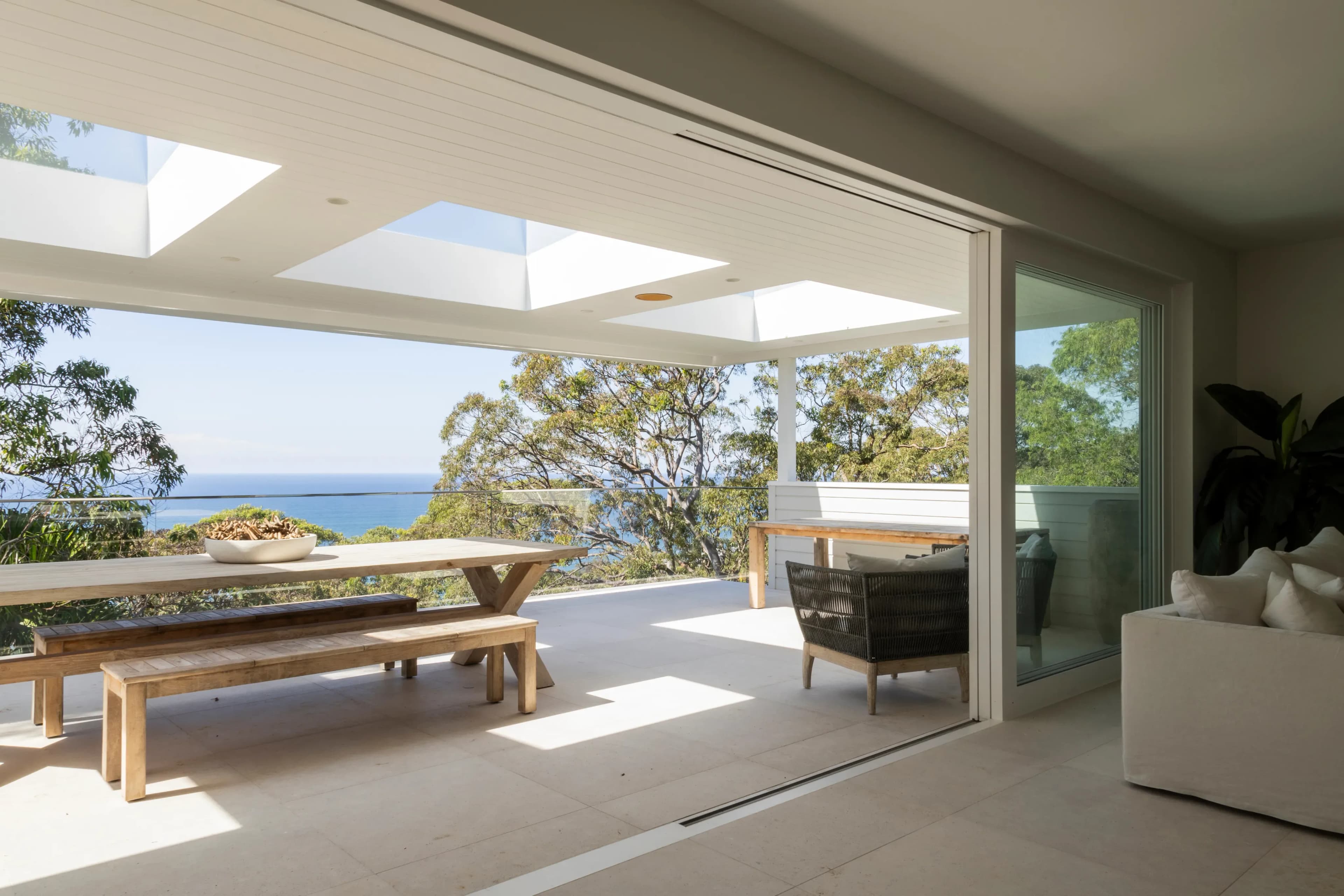
Capability · Knockdown rebuild
Replacing the home, keeping the address.
Demolition coordination, asbestos handling, hazardous-materials clearance, and a complete custom rebuild on a site where you already live, work, or hold value.
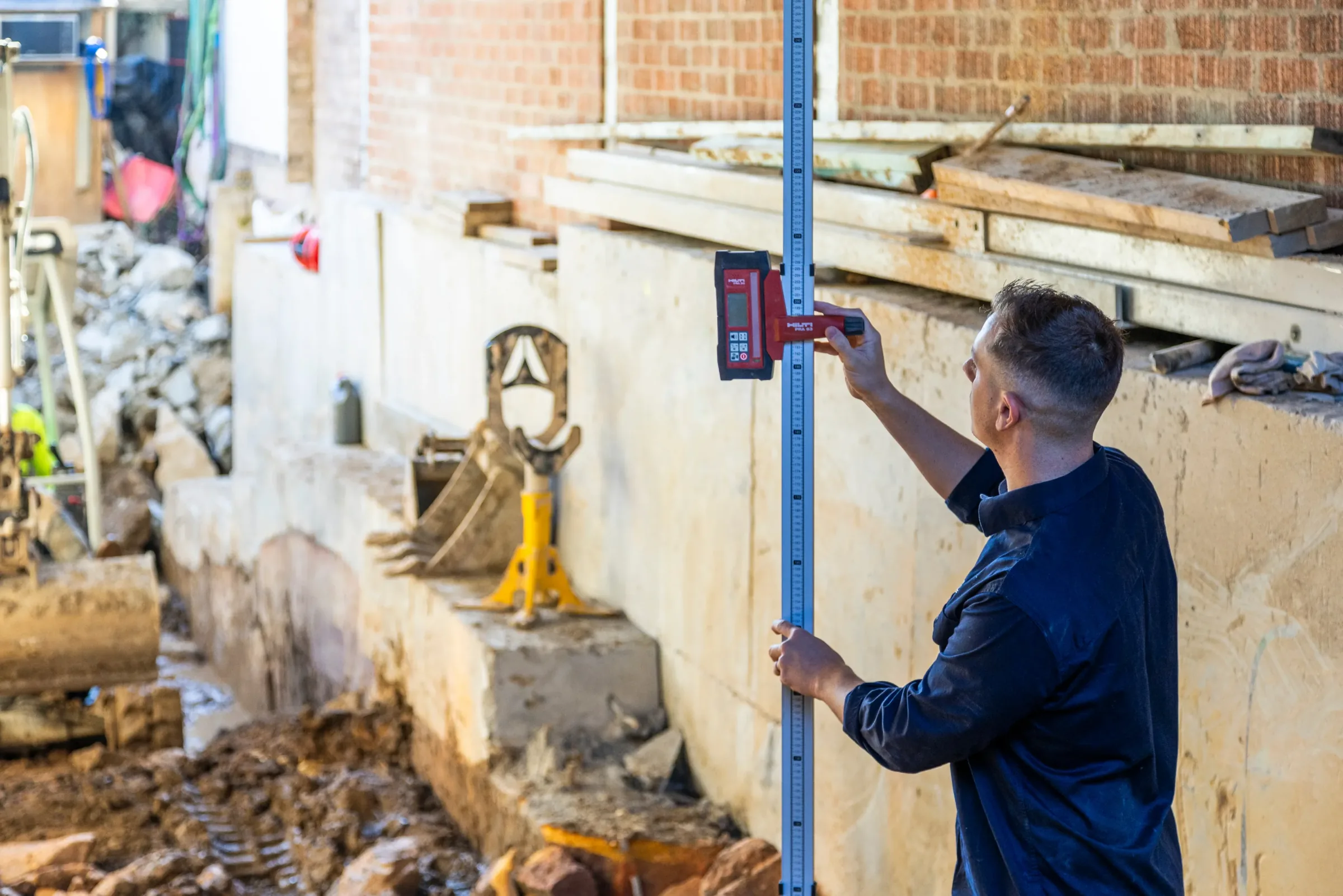
Why KDR is its own conversation
Sydney knockdown rebuild projects are usually driven by one of three things: the existing home is at end-of-life and renovating it is uneconomic; the block is worth keeping (school catchment, view, suburb, family ties) but the house no longer fits the family; or zoning has changed and the site can support more dwelling than it currently has (typically R3/R4 rezone or DCP envelope expansion). The build itself is a custom home — but the demolition, hazardous-materials handling, and council waste compliance are their own front-end project that volume KDR builders typically discount heavily and that often dominates the project's first three months.
The demolition phase — what actually happens
Pre-demolition: hazardous-materials report (mandatory for any structure built before 2003 in NSW), services disconnection from Sydney Water, Ausgrid, and the gas network, asbestos register and removal plan if applicable, council demolition consent (DA or CDC depending on LGA and site characteristics), and neighbour notification under the Dividing Fences Act for any shared boundary works. On-site: licensed asbestos removal first (NSW SafeWork licensed contractor, air monitoring, disposal manifests), then strip-out (fittings, fixtures, joinery for salvage where possible), then structural demolition (excavator with attachment, sequenced from top down), then site clear and waste tracking. Demolition waste in Sydney is heavily regulated — most councils require waste management plans with tracking through certified facilities, and recyclable streams (clean concrete, brick, metal, timber) are separated from general waste. Done right, a Sydney KDR demolition diverts 70–90% of waste from landfill.
Asbestos, lead paint, and what's actually on pre-1990 Sydney homes
Asbestos is the dominant hazardous material. Pre-1990 Sydney homes almost universally contain it in some form: asbestos cement (AC) sheet wall cladding (Hardiflex, fibro), AC eaves linings, AC fence sheets, vinyl floor tiles (vinyl asbestos tile, VAT), VAT backing adhesive, textured ceiling coatings, pipe lagging on old hot-water plumbing, and roofing on a smaller subset of homes (super 6 corrugated). Lead paint is the second material — common on pre-1970 timber weatherboards, window joinery, and original interior trim, and dangerous when sanded or scraped during strip-out. Synthetic mineral fibres (SMF) — common in 1970s-90s insulation — are a third hazard, less acutely dangerous than asbestos but still requiring trained handling. The hazardous-materials report identifies all of these by sampling, and the removal plan sequences each properly. Volume KDR builders price these as fixed allowances and clip the difference; we price them on actual surveyed scope.
The traps in Sydney KDR
Underestimating hazardous materials — the headline cost-blowout on most Sydney KDR projects. Council waste compliance — Sydney councils typically require demolition waste management plans, tracking documentation, and diversion targets. Failure to comply can trigger council enforcement and stop-work orders. Service disconnection scheduling — Sydney Water and Ausgrid disconnections have lead times of 4–8 weeks and aren't optional; missing the booking holds up demolition. Tree retention — significant trees on the lot or in nearby road reserves need to be retained and protected during demolition with tree protection zones (TPZs) per AS 4970, and breaching a TPZ in Sydney is a serious enforcement matter. Heritage and contributory items — even non-listed homes in a Heritage Conservation Area can require additional consent before demolition, and councils have refused KDR consents on contributory non-listed buildings.
How Varloch approaches KDR
We start with a pre-demolition audit: hazardous-materials report (commissioned to a licensed assessor), services disconnection plan (booked with utilities at week 1), neighbour notification under the Dividing Fences Act, council DA conditions review (especially for tree retention and waste diversion), and a waste management plan with tracking documentation. We treat demolition as its own staged sub-project with its own program — typically 3–6 weeks on a standard single-storey Sydney home, longer for substantial or hazardous-materials-heavy structures. The rebuild that follows runs the same way every other Varloch build runs — director on site, in-house trades, fixed scope, transparent cost. Demolition and rebuild are usually delivered on a single contract because it simplifies neighbour relations, site security, and the 4–6 week handover gap that two separate contractors would otherwise produce.
When you might be able to keep parts of the existing home
Sometimes the right answer isn't full demolition. Retaining the original slab can save 4–8 weeks and $40k–$80k on a typical project — but only if it's structurally sound, sized correctly for the new design, and at the right finished floor level. Retaining a chimney, an original facade, or a structural masonry wall is sometimes desirable for character or planning reasons. Adaptive re-use (keeping the shell, gutting and rebuilding the interior) is a defensible option on character homes in Heritage Conservation Areas where full demolition would attract council objection. We'll flag these options during the audit if they apply — but we won't push them when full KDR is the better answer.
Frequently asked
Do I need DA approval for the demolition?
Usually, yes — though some Sydney councils allow demolition under Complying Development Certificate (CDC) for non-heritage homes meeting specific criteria. Always check the LEP and DCP before assuming. Heritage and Conservation Area properties almost always require explicit consent, and demolition of contributory buildings in HCAs can be refused even when the building isn't separately listed.
How long does demolition take?
For a single-storey Sydney home, typically 3–6 weeks including hazardous-materials removal, service disconnection, structural demolition, and site clear. Two-storey homes typically 4–8 weeks. Heavily asbestos-laden structures add 1–3 weeks for licensed removal. Add 4–8 weeks lead time before demolition starts for utility disconnection bookings.
Can I save trees on the site?
Often yes, and councils increasingly require it. Significant trees on the lot or in nearby road reserves need to be retained and protected during demolition with tree protection zones (TPZs) per AS 4970. Council Tree Preservation Orders and the Biodiversity Conservation Act 2016 govern which trees can't be removed without separate consent. Breach of a TPZ is a serious enforcement issue.
Can you handle the demolition and the rebuild on one contract?
Yes — most of our KDR projects run as a single contract. It simplifies sequencing, neighbour relations, site security, and the 4–6 week handover gap that two separate contractors would otherwise produce. The contract itself has phased milestones so demolition and rebuild are administratively distinct.
What happens to the materials from the demolition?
Salvageable items (fittings, fixtures, joinery, bricks, hardwood) are removed for salvage where economic and where the client wants. Clean concrete, brick rubble, metal, and clean timber are recycled through Sydney waste-stream contractors. Mixed waste and hazardous materials go to certified facilities with disposal manifests. Total diversion from landfill is typically 70–90% on a well-managed Sydney KDR.
Can I live on the site during demolition or construction?
Not during demolition (safety, dust, and asbestos exclusion zones). Sometimes during construction in a separate dwelling or caravan, where the lot is large enough to accommodate site separation and the council allows temporary occupancy — but rarely a clean option. Most clients rent locally during the project.
What if asbestos is found during demolition that wasn't in the report?
It happens, particularly in older homes where original work has been over-clad. Discovered asbestos triggers an immediate stop-work, re-assessment by the licensed assessor, removal under the revised plan, and a variation to the contract. We hold a contingency in the demolition budget specifically for this scenario — typically 5–15% of the demolition allowance depending on the age of the structure.
Can I rebuild on the same slab?
Sometimes — if the slab is structurally sound, the new design fits the existing footprint, and the finished floor level works. A structural engineer needs to assess the existing slab (typically 30–60 years old) before reuse can be specified. When it works, retaining the slab saves 4–8 weeks of program and $40k–$80k.
Working on something in this space?
Tell us about your site.
We do an initial conversation either over the phone or on site — your call. No deck, no sales pitch. Just a look at what you’re trying to do and an honest read on whether we’re the right team for it.
Builder of the Year
Australian Business Champions Awards
NSW · Residential construction